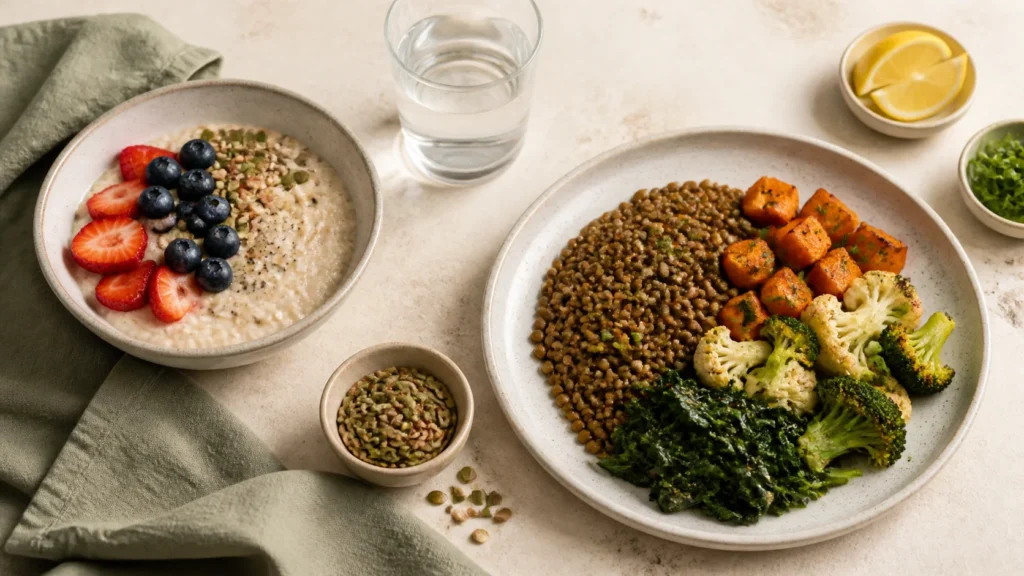
If a sudden push toward “clean eating” has left you gassy and uncomfortable, fiber may not be the villain. The speed and size of the change often matter as much as the food itself.
What to keep in mind
Start with a manageable change and let comfort guide the next step. Different fibers behave differently, and a sudden jump can be difficult even with nutritious foods. Keep enough protein and energy in the meal. Do not keep increasing fiber when severe pain, vomiting, bleeding, unexplained weight loss, or a major bowel change suggests that assessment is needed first.
To increase fiber without bloating, give your digestive system time to adapt. Add one or two modest changes, keep fluids appropriate, and pay attention to the types of foods that work for your body. An overnight jump from a low-fiber diet to bran cereal, a giant salad, beans, chia seeds, and a fiber supplement can overwhelm even a healthy gut.
Why Fiber Can Cause Gas and Bloating
Fiber is the portion of plant food that is not fully broken down by human digestive enzymes. Some fibers add bulk and help stool move through the digestive tract. Others are fermented by gut microbes, producing compounds that may support colon health—and gas as a natural by-product.
A little extra gas during an adjustment period can be normal. Painful distention, vomiting, blood in the stool, or symptoms that keep worsening are not something to dismiss as “detox.”
How Much Fiber Do Adults Need?
U.S. guidance generally places adult fiber needs around 22–34 grams per day, depending on age and sex. Another commonly used benchmark is 14 grams per 1,000 calories. These are broad targets, not a challenge to reach by tomorrow morning.
If you currently eat very little fiber, the most comfortable endpoint may take several weeks. Your personal target may also differ if you have a digestive condition, reduced food intake, or a medically prescribed diet.
A Gentle Step-Up Plan
Step 1: Notice Your Starting Point
For three ordinary days, write down your meals without trying to perfect them. Look for the easiest gap: no fruit, refined grains at every meal, very few vegetables, or legumes only once a month. You do not need an exact fiber count to see the pattern.
Step 2: Add One Small Source
Choose one change and repeat it for several days. Examples include adding a half cup of berries to breakfast, replacing white toast with a whole-grain option, adding a small serving of cooked carrots at dinner, or stirring a tablespoon of ground flax into yogurt.
Step 3: Increase Only When Comfortable
If symptoms remain mild, add another small serving. If bloating becomes distracting, return to the last comfortable level rather than abandoning fiber altogether. Adaptation is not a race.
Fiber Foods That May Feel Gentler
Tolerance is individual, but texture, portion size, and preparation can make a difference.
- Oats: Start with a modest cooked serving rather than a large bowl of dry bran.
- Berries or kiwi: Pair a normal portion with yogurt or oatmeal.
- Cooked vegetables: Zucchini, carrots, green beans, or squash may feel easier than an enormous raw salad.
- Lentils and beans: Begin with a few tablespoons or about one-quarter cup. Rinsing canned beans removes some compounds in the packing liquid.
- Ground flax or chia: Start small and take them with adequate fluid.
- Whole grains: Swap one refined-grain serving instead of changing every grain in the same day.
Fluids Help Fiber Do Its Job
Fiber holds water, and adequate fluid can help stools stay softer and easier to pass. There is no single water prescription for everyone because needs vary with body size, climate, activity, diet, pregnancy, and health conditions. Regular thirst and pale-yellow urine can be practical clues for many healthy adults, though supplements and medications can affect urine color.
If you have heart failure, kidney disease, or another medical fluid restriction, do not increase fluids based on general internet advice. Follow your clinician’s plan.
Food First or a Fiber Supplement?
Food offers a mixture of fibers plus vitamins, minerals, and plant compounds, so it is a sensible first choice. Supplements can be useful for specific symptoms or when food alone is not enough, but different products behave differently.
Psyllium forms a gel and has evidence for helping some people with constipation and some with IBS. Coarse wheat bran may worsen symptoms in certain sensitive individuals. Fiber powders must be mixed and taken exactly as directed; swallowing dry powder can create a choking risk.
What If You Have IBS?
“Eat more fiber” is not a complete IBS plan. Some high-fiber foods also contain fermentable carbohydrates called FODMAPs, which can worsen gas, pain, or altered bowel habits in susceptible people. Soluble fiber may be better tolerated than coarse insoluble fiber for some, but there is no universal safe-food list.
A temporary low-FODMAP trial should ideally be guided by a registered dietitian and followed by structured reintroduction. Staying highly restricted without reintroduction can reduce diet variety and make social eating unnecessarily difficult.
When More Fiber May Be the Wrong Move
High-fiber advice may be inappropriate during certain inflammatory bowel disease flares, with gastroparesis, after some gastrointestinal surgeries, or when there is known or suspected narrowing or obstruction. People with swallowing problems also need special caution with bulky foods and fiber supplements.
Seek medical care for severe or persistent abdominal pain, vomiting, inability to pass stool or gas, black or bloody stool, fever, unexplained weight loss, anemia, or a major sustained change in bowel habits. Do not keep adding fiber to unexplained symptoms.
A One-Day Gentle Fiber Example
- Breakfast: Oatmeal with blueberries and yogurt.
- Lunch: Chicken or tofu bowl with rice and cooked vegetables.
- Snack: Kiwi with a small handful of walnuts.
- Dinner: Salmon or tempeh with potatoes, green beans, and a small serving of lentils if tolerated.
This is an example, not a prescription. Portion size and specific foods should reflect your calorie needs, preferences, allergies, and digestive tolerance.
Frequently Asked Questions
How quickly should I increase fiber?
There is no perfect schedule. Add a small serving, hold it for several days, and increase again only when symptoms are manageable. People starting from very low intake may need weeks.
Does cooking vegetables remove all the fiber?
No. Cooking changes texture and can make some vegetables easier to tolerate, but it does not erase their fiber.
Should I stop fiber if I feel gas?
Mild gas may settle as your gut adapts. Reduce the portion or slow the pace if symptoms are bothersome. Severe or persistent symptoms deserve professional assessment.
The Bottom Line
The most comfortable way to eat more fiber is usually gradual and food-first. Add one manageable source, keep fluids appropriate, use preparation methods that feel gentler, and let symptoms guide the pace. A flexible plan that your gut tolerates is more useful than reaching a perfect number for three uncomfortable days.
For a related practical guide, read Soluble vs. Insoluble Fiber: What Is the Difference?.
Sources
- NIDDK: Eating, diet, and nutrition for constipation
- NIDDK: Eating, diet, and nutrition for IBS
- FDA: Questions and answers on dietary fiber
- ACG Clinical Guideline: Management of Irritable Bowel Syndrome
This article is for educational purposes and does not replace individualized medical or nutrition advice.