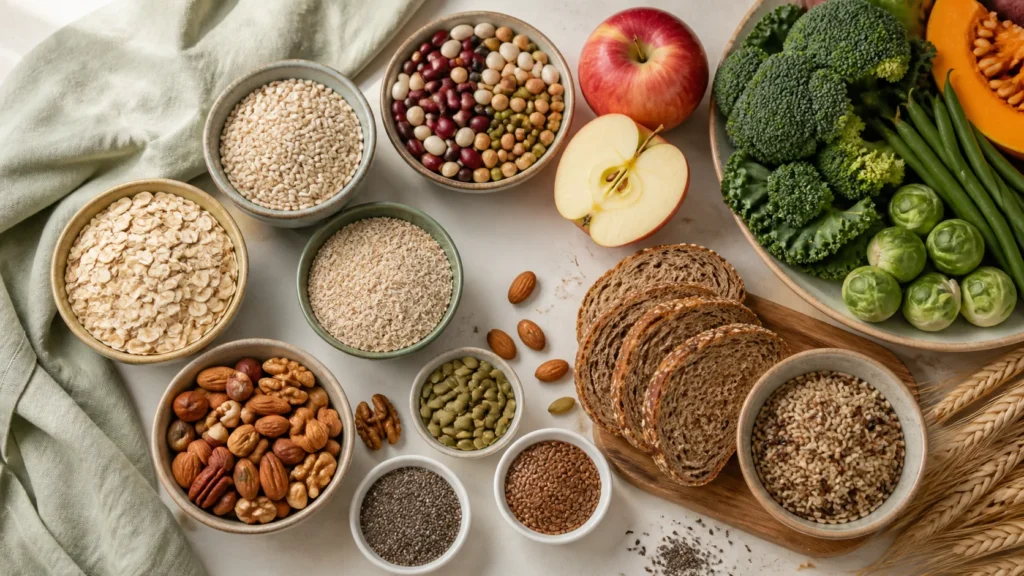
Soluble vs. insoluble fiber sounds like a nutritional contest: one for cholesterol, the other for constipation. Real food is less tidy. Most plant foods contain a mixture of fibers, and their effects also depend on whether they form a gel, how readily gut microbes ferment them, and how much you eat.
What to keep in mind
Solubility is useful, but it does not explain every fiber effect. Gel formation, fermentation, portion, and personal tolerance also matter. Most whole plant foods provide mixed fibers, so separate daily quotas are unnecessary for most people. Begin with varied foods and gradual changes, and personalize supplements or restrictive diets when a digestive condition or other medical need is present.
You do not need to calculate separate daily quotas for each type. Understanding the difference can, however, help you choose foods when you are trying to support bowel regularity, manage cholesterol, or increase fiber without overwhelming a sensitive gut.
What Is Dietary Fiber?
Dietary fiber includes nondigestible carbohydrates and lignin that are intrinsic and intact in plants. The FDA also recognizes certain isolated or synthetic nondigestible carbohydrates when evidence shows a beneficial physiological effect. This is why a product can contain an added fiber that appears on the Nutrition Facts label even though it did not begin as an intact piece of fruit, bean, or grain.
“Fiber” is therefore a family of compounds, not one substance. The soluble-versus-insoluble distinction is useful, but it is only the first layer.
What Is Soluble Fiber?
Soluble fiber dissolves or disperses in water. Some soluble fibers become viscous, forming a gel-like material in the digestive tract. Others dissolve but do not form much of a gel. Many are fermented to some degree by gut microbes.
Common food sources include:
- oats and oat bran;
- barley;
- beans, lentils, and peas;
- apples, pears, citrus, and some berries;
- carrots and other vegetables;
- nuts and seeds;
- psyllium.
The label “soluble” does not mean every item produces the same effect. Beta-glucan from oats and barley and the gel-forming fiber in psyllium are especially relevant to cholesterol. Other soluble fibers may be highly fermentable and influence the gut microbiome more than stool bulk.
What Is Insoluble Fiber?
Insoluble fiber does not dissolve in water in the same way. It can add bulk to stool and help material move through the digestive tract. Sources include wheat bran, many whole grains, vegetable skins, nuts, seeds, and the structural portions of numerous plants.
Insoluble does not mean unimportant or “roughage only.” Foods rich in insoluble fiber also deliver vitamins, minerals, and plant compounds—and often contain some soluble fiber at the same time.
A Simple Comparison
- Water behavior: Soluble fiber dissolves or disperses; insoluble fiber generally does not.
- Gel formation: Some soluble fibers form viscous gels, but not all soluble fibers are equally viscous.
- Stool effect: Insoluble fiber can add bulk; gel-forming soluble fiber can help normalize stool consistency.
- Fermentation: Some fibers are rapidly fermented, some slowly, and others only minimally. Solubility alone does not predict the full response.
- Food sources: Categories overlap. Beans, fruits, vegetables, whole grains, nuts, and seeds can contribute a mixture.
Why Viscosity and Fermentability Matter
Two soluble fibers may behave very differently. A viscous fiber creates a gel that can slow the movement and absorption of nutrients. A readily fermented fiber becomes fuel for gut microbes and may lead to production of short-chain fatty acids. Fermentation can also increase gas, particularly when intake rises quickly.
This is why “soluble fiber” is not a complete prediction of digestive comfort. Psyllium is soluble, viscous, and relatively resistant to fermentation. Some added fibers dissolve easily but are rapidly fermented and may produce more gas in sensitive people.
Which Type Is Better for Constipation?
There is no universal winner. Insoluble fiber can add stool bulk and help some people. Coarse wheat bran may worsen bloating or pain in some people with IBS. Psyllium, a gel-forming soluble fiber, has clinical evidence for improving stool frequency and consistency and is recommended in some constipation and IBS guidance.
Fiber works best when the underlying cause is considered. Medication effects, pelvic-floor dysfunction, low food intake, dehydration, thyroid disease, and gastrointestinal disorders can all contribute to constipation. Simply adding more bran will not solve every cause.
Which Type Is Better for Cholesterol?
Viscous soluble fibers have the clearest cholesterol-lowering effect. Beta-glucan from oats or barley and psyllium can help reduce LDL cholesterol when consumed in effective amounts as part of an overall heart-supportive eating pattern.
A bowl of oatmeal does not cancel a diet high in saturated fat, and an isolated fiber supplement does not replace blood-pressure management, physical activity, or prescribed medication. Think of viscous fiber as one useful tool.
What About Blood Sugar?
Viscous fibers can slow gastric emptying and nutrient absorption, which may soften the rise in blood glucose after a meal. Whole high-fiber foods also tend to be less rapidly digested than refined foods. The response depends on the entire meal, portion size, preparation, and individual glucose regulation.
People taking glucose-lowering medication should not use fiber as a substitute for treatment. Large dietary changes may alter glucose patterns, so monitoring and professional guidance can be helpful.
How Much Fiber Do You Need?
General U.S. recommendations place adult needs around 22–34 grams daily depending on age and sex, or approximately 14 grams per 1,000 calories. There is no official requirement to split that number into soluble and insoluble grams.
The simplest route is variety: legumes, whole grains, vegetables, fruits, nuts, and seeds across the week. Different plants bring different fiber structures.
A Food-First Day With Both Types
- Breakfast: Oatmeal with berries and walnuts.
- Lunch: Lentil soup with whole-grain toast and a side salad.
- Snack: An apple or pear with nut butter.
- Dinner: Brown rice or barley with roasted vegetables and tofu, fish, or chicken.
This is an illustration, not a prescription. Portion sizes and specific foods should reflect your energy needs, allergies, medical conditions, and digestive tolerance.
How to Increase Fiber Comfortably
Add fiber gradually, especially if your current intake is low. Introduce one modest serving and keep it consistent for several days before adding more. Drink appropriate fluids unless you have a medical restriction. Cooking vegetables, choosing smaller servings of legumes, and rinsing canned beans may improve comfort for some people.
If one food creates significant symptoms, that does not mean all fiber is wrong for you. Reduce the portion, change the preparation, or try another source.
When Fiber Supplements Need Caution
Follow mixing directions carefully. Taking dry psyllium or another expanding fiber without enough liquid can create a choking or blockage risk. Fiber may also affect the absorption or timing of some medications; check the label and ask a pharmacist how far apart to take them.
People with swallowing difficulty, gastroparesis, known intestinal narrowing, suspected obstruction, or certain post-surgical conditions should get medical guidance before adding a bulky supplement.
Frequently Asked Questions
Is oatmeal soluble or insoluble fiber?
Oats contain both, but they are well known for beta-glucan, a viscous soluble fiber.
Do I need to peel fruit for soluble fiber?
No. The flesh and skin contribute different fibers, and eating both usually provides a useful mixture. Peel fruit only when texture, a medical diet, or digestive tolerance calls for it.
Can one food contain both types?
Yes. Most whole plant foods do. The categories describe fiber properties, not two separate food kingdoms.
Which fiber is best for IBS?
Tolerance varies. Soluble, gel-forming fiber such as psyllium may be better tolerated than coarse bran for some people, but IBS symptoms and triggers differ. A clinician or dietitian can personalize the approach.
The Bottom Line
Soluble and insoluble fibers are teammates, not rivals. Soluble fibers vary in viscosity and fermentation; insoluble fibers can support bulk and movement. Eat a broad range of plant foods, increase gradually, and use symptoms—not internet fiber challenges—to guide the pace.
To place fiber alongside protein, bone-supporting nutrients and adequate energy, see healthy eating after 50.
Explore more guidance in our Nutrition collection.
Sources
- MedlinePlus: Soluble vs. insoluble fiber
- FDA: Questions and answers on dietary fiber
- NIDDK: Eating, diet, and nutrition for constipation
- ACG Clinical Guideline: Management of Irritable Bowel Syndrome
This article is for educational purposes and does not replace individualized medical or nutrition advice.