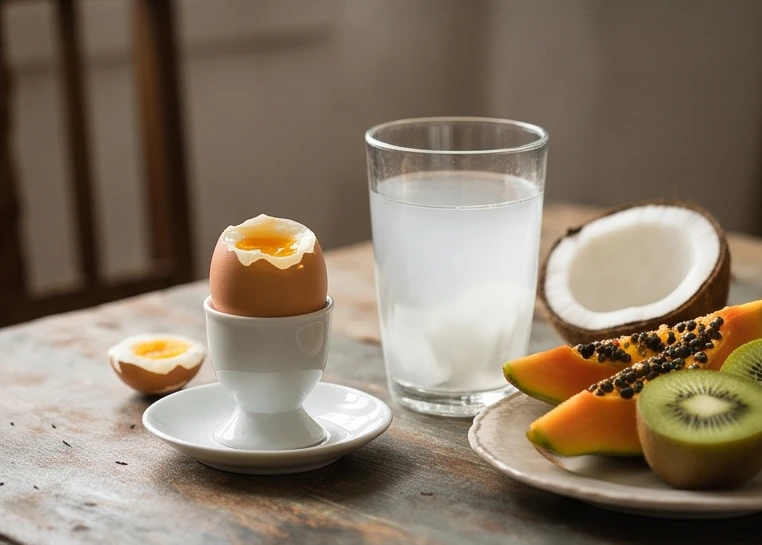
A shopping list promises an egg for energy, coconut water for hydration, and fruit for everything from digestion to a better evening. The appealing part is that these are ordinary foods. The confusing part comes when each one is assigned a medical job. On a busy Tuesday, the useful question may be much simpler. Do you need breakfast that will travel, a drink you enjoy after a walk, or something you can eat comfortably before dinner? Each of those questions leads to a different choice, even if the same foods are sitting on the counter.
Verdict: the evidence supports a few narrow, short-term effects, not sweeping health promises. Egg-based breakfasts improved satiety in one small trial, coconut water did not outperform plain water in a small exercise test, and whole apples affected fullness and intake at a single meal. None of these experiments shows that one food treats a symptom or changes long-term health on its own.
Start with the meal you actually miss
Think about the last morning you left home with only coffee. If the problem was a missing breakfast, an egg can help because it is an easy source of protein that fits into a meal. Put it on toast, add a piece of fruit, and you have something you can sit down and eat. If the obstacle was time, hard-cooking eggs in advance might help more than debating which breakfast ingredient supplies the most energy. Another household may find oats and yogurt easier. Both solutions begin with the missed meal.
There is a small controlled trial behind the egg and fullness question, though it does not prove that eggs keep everyone energized all morning. Forty-eight healthy, normal-weight adults, average age 24, tried three breakfasts in a randomized crossover study. Each meal had 390 calories and the same fat content: an egg breakfast with 30 grams of protein, an egg-and-fiber breakfast with 20 grams of protein plus 7 grams of fiber, or a lower-protein cereal breakfast with 10 grams of protein. The higher-protein egg meal increased reported satiety, and both egg breakfasts were followed by lower intake at the next test meal than the cereal breakfast. Because the meals differed in protein and fiber, the study cannot attribute the whole difference to eggs. It also measured one short-term eating occasion, not lasting weight or energy changes.
A promise of energy “all day” asks a single ingredient to do too much. The time until lunch, how much you eat, whether you slept well, and what your morning involves can all change how you feel by noon. When a breakfast leaves you hungry, look at the whole plate and the gap until your next meal. An egg eaten alone while standing at the refrigerator is a different breakfast experience from an egg sandwich packed for the train.
When the job is hydration
Water is straightforward, portable, and usually inexpensive. Coconut water offers another flavor and contains minerals including potassium. Someone who enjoys it may find it a pleasant drink after a walk. The more interesting scientific question is whether choosing it gives an advantage over drinking water under comparable conditions. In one randomized crossover test, 10 men completed 60 minutes of cycling followed by a 10-kilometer time trial while drinking either coconut water or plain water. The researchers found no significant difference in measured hydration markers or time-trial performance. That is a small, specific test, not a study of every kind of everyday hydration.
That experiment has a defined setting. A supervised workout followed by a performance test differs from a leisurely afternoon outdoors, a long race in the heat, or illness that makes it difficult to keep fluids down. It also cannot predict which beverage you prefer or which is easiest to carry. When considering a purchase for ordinary use, compare the price per serving and the ingredient list. Some products contain added sugar or come in containers larger than the serving used on the label. You can choose the flavor you like without needing a performance claim to justify it.
Whole fruit and the experience of fullness
Researchers studying apples asked a useful kitchen question. Would people feel equally full after whole apple, applesauce, or juice before lunch? In a controlled crossover study, 58 adults tried apple, applesauce, and two forms of apple juice on separate weekly visits over five weeks, followed 15 minutes later by a lunch they could eat freely. The whole-apple condition produced the greatest fullness and 15% lower total intake at that meal than the no-starter control. It was a single-meal experiment, not evidence that apples cause lasting weight change.
You can use that result without turning lunch into an experiment in eating less. Suppose you regularly drink juice between appointments and find yourself looking for a snack a few minutes later. Try a whole piece of fruit on a day you have time to eat it. Notice whether it suits your appetite and your schedule. Someone with chewing difficulties may prefer softer fruit or applesauce. Form changes the experience, and comfort matters when deciding what you will actually eat.
Decide what belongs beside the fruit
Watermelon can be especially welcome when it is cold and the afternoon is hot. A banana travels well in its own wrapper. Neither convenience requires a promise about cleansing the body or fixing a symptom. Think instead about where the fruit sits in the day. A bowl of melon after lunch serves a different purpose from the only food you can find during a long gap between meals. For that longer gap, you may want something more substantial alongside it.
Try packing a banana with a small container of plain yogurt, or serving melon with an ordinary lunch of bread, beans, and vegetables. If fresh papaya is expensive where you live, choose a fruit you enjoy and can reliably buy. The practical advantage may be that you will eat it before it spoils. A household that repeatedly discards half a large melon might do better with a smaller purchase, frozen fruit, or a plan to share the melon over two meals.
A snack can be enjoyable without a health promise
A square of dark chocolate after dinner, cherries with yogurt, or a warm cup of ginger tea can each earn a place through taste alone. Trouble starts when you expect a single serving to correct fatigue, consistently change sleep, or treat an unexplained digestive problem. Then a pleasant food starts to carry the pressure of a treatment. Ask what success would mean in the moment. Enjoying a familiar drink after dinner is an outcome you can judge yourself that evening.
The answer may change with the season or with your budget. Fresh cherries might be a short summer pleasure, while frozen cherries stirred into oats offer a less expensive option later in the year. If tea is your cue to sit down after work, the quiet ten minutes are part of the experience too. There is little reason to attribute every change in how you feel to the ingredient in the cup.
Build one ordinary day before buying ten special foods
Pick one point in the day that routinely goes wrong. Perhaps there is a long stretch between breakfast and lunch, your water bottle stays behind when you leave home, or the only snack available at work is whatever a colleague brings in. Choose one affordable change that addresses that exact problem. Put fruit where you pack your bag, refrigerate a breakfast you enjoy, or keep a clean bottle next to your keys. After a few days, see which change you want to keep.
A useful grocery list reflects the people eating from it. Someone with a prescribed fluid restriction or a clinician-directed limit on potassium needs advice specific to that plan before making coconut water a daily habit. Someone bothered by persistent fatigue needs an opportunity to discuss the symptom itself. For everyday meals, the test can remain refreshingly simple. Did the food fit the occasion, did you enjoy it, and was it affordable enough to choose again next week?