Inflammatory foods in salad make a perfect clickbait headline because “salad” sounds automatically healthy and “inflammation” sounds urgent. In practice, no single topping transforms a bowl into poison. The useful question is how the full meal supports nutrition, satisfaction, and your individual needs.
What to keep in mind
Evaluate the whole meal rather than treating one topping as contamination. A useful salad provides enough food, tastes good, and fits your individual needs. Convenience ingredients can help. If a bowl repeatedly causes symptoms, consider portion, preparation, and specific triggers instead of diagnosing inflammation from discomfort. Persistent or alarming symptoms deserve assessment rather than a growing list of forbidden foods.
Start with the foundation
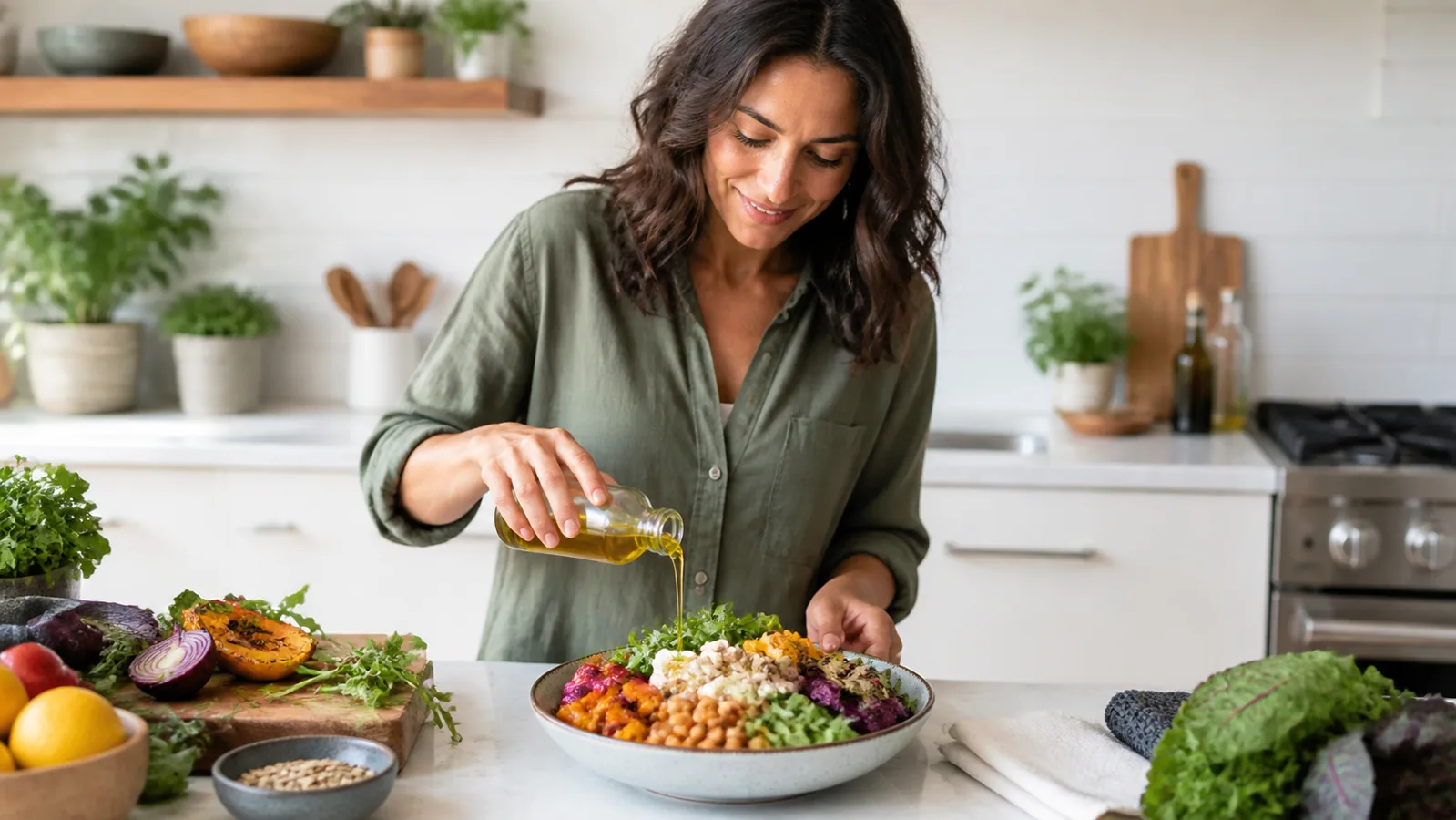
Leafy greens and colorful vegetables provide fiber, water, vitamins, minerals, and plant compounds. Add protein—beans, lentils, eggs, fish, poultry, tofu, or yogurt-based dressing—and a source of carbohydrate if the salad is a meal. Nuts, seeds, avocado, and olive oil can improve satisfaction and help absorb fat-soluble nutrients.
What may quietly change the balance?
Large amounts of processed meat, highly salted toppings, sugary dressings, and oversized fried additions can raise sodium, refined carbohydrate, or energy density. That is context, not contamination. A bottled dressing can still fit; compare serving size, sodium, and added sugar, then use enough to make vegetables enjoyable.
Processing is not one category
Human studies often associate higher intake of ultra-processed foods with poorer health outcomes and, in some populations, higher inflammatory markers. These studies do not prove that every processed ingredient is harmful. Canned beans, frozen vegetables, pasteurized yogurt, and whole-grain bread are processed too—and can be practical, nourishing foods.
Food intolerances are individual
If a salad repeatedly causes symptoms, consider portion size, a sudden fiber increase, lactose, fermentable carbohydrates, or a specific allergy rather than assuming “inflammation.” Persistent pain, bleeding, weight loss, or major bowel changes deserve clinical evaluation.
Use inflammation as a clinical concept, not a food score
Inflammation is part of normal immune defense and repair. Chronic inflammatory processes can be involved in disease, but an ordinary meal cannot be assigned a reliable personal inflammation score from its appearance. A social-media list that labels every dressing, cheese, or cooked ingredient inflammatory skips questions about amount, overall eating pattern, the person’s health, and the outcome actually being measured.
Research on dietary patterns is more useful than a purity test for individual toppings. Eating more fiber-rich plants and choosing unsaturated fats can fit a heart-supportive pattern. That does not make a salad with a favorite creamy dressing a failure. A bowl that tastes unpleasant and leaves you hungry may be less helpful in daily life than a satisfying meal you can repeat.
Build a complete meal in four steps
First choose vegetables you genuinely enjoy. They can be raw, cooked, roasted, frozen and thawed, or leftover from dinner. A salad does not have to be an enormous pile of leaves. Second, include a protein food such as lentils, beans, tofu, eggs, fish, chicken, or another option that fits your preferences. The exact portion depends on appetite and the rest of your day.
Third, consider a carbohydrate source if this is the main meal. Potatoes, brown rice, quinoa, whole-grain bread, corn, or other grains can make the bowl more sustaining. Fourth, add flavor and fat through a dressing, nuts, seeds, olives, avocado, or another ingredient. These are flexible components, not a rule that every salad must contain a particular number of items.
Three realistic bowls to adapt
A pantry bowl might combine canned chickpeas, chopped cucumber, tomatoes, a microwave grain pouch, and olive oil with lemon. Rinse beans if you prefer their taste that way, compare sodium when relevant, and adjust the portion to your appetite. The convenience ingredients make the meal possible; they do not disqualify it from being nutritious.
A leftover bowl might use roasted carrots, cooked potatoes, chicken or tofu, greens, and a yogurt-based dressing. A softer option for someone who finds large raw salads uncomfortable could use cooked zucchini, rice, lentils in a tolerated portion, and a little dressing. These examples show how texture, access, and digestion can shape the meal without changing its basic purpose: enough enjoyable food.
Read dressing labels with a purpose
Decide which information matters to you before comparing products. If blood pressure is a concern, sodium may be relevant. If a sweet dressing is used generously, added sugar and the actual serving may be useful to notice. If an allergy is present, the ingredient and allergen statements are essential. A long ingredient list by itself is not a clinical measure of harm.
Use enough dressing to enjoy the vegetables, and pay attention to the whole bowl. Fat can improve flavor and help with absorption of some nutrients. A low-fat label is not automatically a better choice, just as homemade is not automatically lower in salt. The goal is an informed preference rather than another reason to fear food.
When a salad does not agree with your gut
A sudden increase in fiber, a very large portion, certain fermentable carbohydrates, or a particular ingredient can cause discomfort. The pattern matters. Notice whether symptoms follow one food, a large raw meal, or meals eaten very quickly. Try a manageable adjustment such as a smaller serving or more cooked vegetables rather than removing entire food groups at once.
If you have IBS, inflammatory bowel disease, swallowing difficulty, or a prescribed medical diet, a generic salad formula may need adaptation. Persistent pain, vomiting, bleeding, unexplained weight loss, or a major sustained change in bowel habits deserves medical assessment. A food diary can help describe the problem, but it cannot diagnose an allergy or prove that a meal caused systemic inflammation.
Food safety still matters
Nutrition discussions sometimes overlook ordinary handling. Wash hands and preparation surfaces, follow package instructions for produce, keep perishable ingredients appropriately chilled, and prevent cross-contamination from raw meat or fish. A beautifully composed bowl is not safer simply because its ingredients are described as clean. People at higher risk from foodborne illness may need specific advice about raw or unpasteurized ingredients.
For meal preparation, store components sensibly and assemble a portion when needed. Consider carrying the dressing separately if that improves texture and makes the meal more appealing. Practical details often determine whether a planned lunch actually gets eaten. A balanced salad should support your life and leave room for enjoyment, convenience, and individual tolerance.
The Healthspan Muse perspective
A good salad is not the one with the fewest ingredients. It is the one that tastes good, provides enough food, and fits the rest of your day. Build it for nourishment—not purity.
For a related practical guide, read How to Increase Fiber Without Bloating.
Sources
- Ultra-processed food and human health: umbrella review
- Ultra-processed foods and inflammatory biomarkers: scoping review
This article is educational and is not medical advice.