Can Green Smoothies Affect Blood Sugar or Kidney Stone Risk?
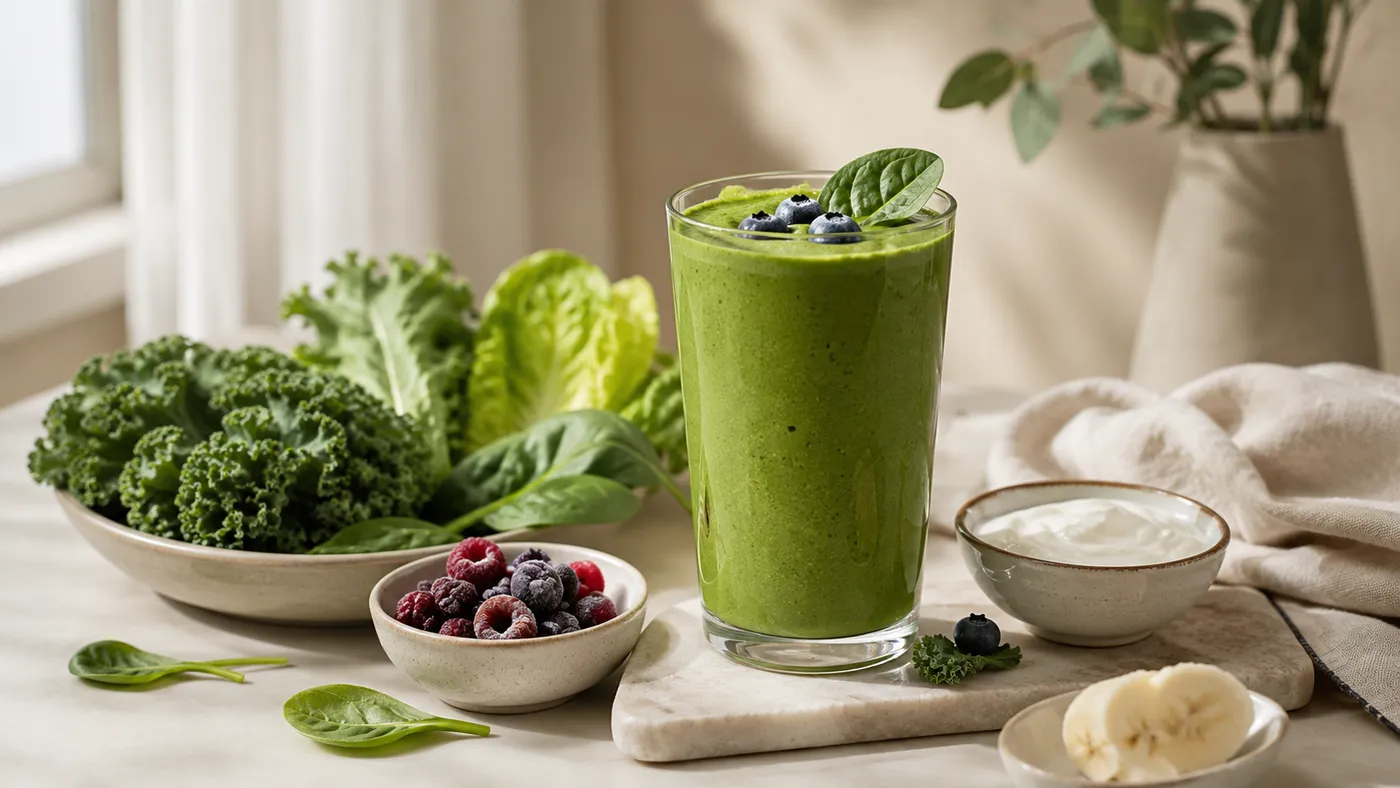
A green smoothie is not secretly “aging” you. Nor is it automatically a health drink simply because it contains spinach.
What matters is the complete recipe: the amount and type of fruit, whether it contains juice or added sweeteners, how much protein and fiber it provides, and whether any ingredients conflict with your medical needs. A smoothie made with whole fruit, vegetables, and a meaningful source of protein can be a practical breakfast. A large blend dominated by juice, sweetened yogurt, dates, and flavored powders may function more like a dessert.
The useful question is not whether green smoothies are good or bad. It is whether your particular smoothie is balanced, filling, and appropriate for you.
For more practical, evidence-aware guides, browse the Wellness Journal.
Does Smoothie Sugar Cause Premature Aging?
The original claim that any smoothie containing more than 25 grams of sugar causes dangerous blood sugar spikes is misleading.
The World Health Organization’s recommendation to limit “free sugars” refers to sugars added to foods and drinks, along with sugars in honey, syrups, fruit juice, and juice concentrates. It does not establish 25 grams as a danger threshold for an individual smoothie, and the guideline does not apply in the same way to sugars naturally enclosed within fresh fruits and vegetables.
Blending whole fruit does not remove its fiber in the way juicing does, although it changes the fruit’s physical structure and makes it easier to consume quickly. Limited human research has not shown that blended fruit universally produces a greater glucose response than eating the same fruit whole. In one small trial of healthy young adults, blended apple and blackberries produced a lower post-meal glucose response than the whole-fruit version. That finding should not be generalized to every fruit, recipe, or person, but it challenges the assumption that all blended fruit inevitably “spikes” blood sugar.
The larger concern is concentration. A smoothie can contain several servings of fruit, plus juice, honey, flavored milk, sweetened yogurt, or dried fruit. That combination can deliver considerably more carbohydrate and energy than someone would normally eat in one sitting.
Glycation, the process in which sugars react with proteins and contribute to the formation of advanced glycation end products, is involved in changes to collagen and other tissues. However, research on glycation does not show that an occasional fruit smoothie directly causes wrinkles or accelerates aging. The concern is more relevant to long-term metabolic health and persistently elevated blood glucose, particularly in diabetes, than to one appropriately portioned breakfast.
A more practical approach to smoothie sugar
You do not need to ban bananas, mangoes, or other sweeter fruits. Instead:
- Use whole fresh or frozen fruit rather than fruit juice.
- Start with roughly one serving of fruit instead of combining several large portions.
- Avoid adding honey, syrups, sweetened yogurt, or sweetened plant milk unless they serve a specific purpose.
- Include protein and fiber so the smoothie functions more like a balanced meal.
- Adjust the fruit and total carbohydrate content with a registered dietitian or diabetes care professional if you have diabetes or take glucose-lowering medication.
Oxalates Matter for Some People, Not Everyone
Oxalates are naturally occurring compounds found in many plant foods. In susceptible people, absorbed oxalate can combine with calcium in the urine and contribute to calcium oxalate kidney stones.
Spinach and Swiss chard are particularly high in oxalate. Kale, romaine, and arugula are substantially lower, so the original draft was incorrect to place kale in the same high-oxalate category as spinach.
Most people do not need to avoid nutritious foods merely because they contain oxalates. The issue deserves greater attention if you have:
- A history of calcium oxalate kidney stones
- High urinary oxalate identified through testing
- Certain intestinal or malabsorption conditions
- A history of some forms of bariatric surgery
- Kidney disease requiring an individualized eating plan
People prone to calcium oxalate stones should not automatically eliminate dietary calcium. Adequate calcium consumed with meals can bind oxalate in the digestive tract and reduce the amount absorbed. Hydration, sodium intake, total dietary pattern, and the specific type of stone also matter. A clinician or renal dietitian can provide advice based on stone analysis and urine testing.
Claims that smoothie oxalates routinely cause joint pain, systemic inflammation, or widespread calcium depletion are not adequately supported and should not be presented as established facts.
Will Drinking Breakfast Leave You Hungry?
Possibly, but it depends on the recipe and the person.
A systematic review and meta-analysis found that solid foods tended to reduce hunger more than liquids, although results for fullness and later food intake were less consistent. Thicker foods and drinks may be more satisfying than thin liquids. Protein content, fiber, energy density, portion size, and eating speed can all influence the result.
A thin smoothie made mainly from juice and fruit may be easy to drink without providing lasting satisfaction. A thicker smoothie containing protein, whole fruit, and vegetables is more likely to function as a meal.
Signs that your smoothie may need adjusting include feeling hungry shortly afterward, routinely needing an unplanned snack, or drinking it in addition to a full breakfast rather than instead of one.
To make it more filling:
- Include a substantial protein source, such as plain Greek yogurt, fortified soy milk, silken tofu, or an appropriate protein powder.
- Retain whole fruit and vegetables rather than straining out the pulp.
- Keep the texture relatively thick.
- Drink it slowly rather than finishing it in a few minutes.
- Pair it with a chewable food, such as an egg or whole-grain toast, when the smoothie alone does not satisfy you.
Drinking breakfast does not “slow your metabolism.” That statement is unsupported. The practical concern is simply that some liquid meals may be less satisfying and easier to overconsume.
Dairy Is Not Automatically Inflammatory
Milk, Greek yogurt, and whey protein are not inherently inflammatory for most people.
Reviews of controlled trials have generally found that dairy foods and dairy proteins have neutral or, in some studies, favorable effects on common inflammatory markers. The evidence does not support describing conventional dairy as being “loaded with inflammatory compounds.”
Dairy may still be unsuitable for people with a milk allergy or poorly managed lactose intolerance. Some people also notice digestive symptoms with particular products, serving sizes, or sweeteners used in flavored dairy foods.
Observational studies have found an association between milk consumption and acne, particularly in adolescents and young adults. However, these studies cannot prove that milk causes acne, and yogurt and cheese have not shown the same association consistently. Anyone who suspects a connection can keep a symptom and food record and discuss it with a dermatologist or registered dietitian rather than eliminating an entire food group without a plan.
Unsweetened dairy milk, lactose-free milk, Greek yogurt, and fortified soy alternatives can all contribute protein and nutrients. The best choice depends on allergies, tolerance, dietary preferences, and the rest of the recipe.
Collagen and “Anti-Aging” Add-Ins Are Optional
A smoothie does not become an anti-aging treatment when collagen powder, cacao, turmeric, maca, or an adaptogenic herb is added.
Collagen peptides provide amino acids, but claims that they reliably preserve youthful skin or directly rebuild joints are stronger than the evidence allows. A 2025 meta-analysis found overall improvements in hydration, elasticity, and wrinkles when all eligible trials were pooled. However, those benefits were not significant in the higher-quality or non-industry-funded studies, raising concerns about study quality and sponsorship bias.
Collagen can be used as a protein-containing supplement, but it is not a complete substitute for varied dietary protein and should not be presented as essential after age 30.
The original recommendation to add ashwagandha, rhodiola, holy basil, or maca for stress reduction and “hormone balance” was also inappropriate. Herbal supplements can cause side effects and interact with medications. Ashwagandha, for example, is not recommended during pregnancy or breastfeeding and has been linked in rare cases to liver injury.
When using any powdered supplement:
- Look for a simple ingredient list.
- Check for allergens.
- Avoid products with multiple stimulants or proprietary herbal blends.
- Consider independent third-party certification.
- Discuss regular use with a clinician or pharmacist when you take medication, are pregnant, or have a medical condition.
Dietary supplements are not tested by the FDA for effectiveness before being sold in the United States.
How to Build a More Balanced Green Smoothie
A practical smoothie usually needs four components.
1. A mostly unsweetened liquid
Good options include water, unsweetened dairy milk, lactose-free milk, or an unsweetened fortified plant beverage.
Fruit juice and coconut water are not forbidden, but both add carbohydrate without providing the same amount of fiber as whole fruit. They may be more useful in small amounts for flavor than as the entire liquid base.
2. A reasonable portion of whole fruit
Try approximately ½ to 1 cup of fruit. Berries, peaches, cherries, apples, mango, pineapple, and bananas can all fit.
Berries are convenient and relatively high in fiber, but there is no need to label them “anti-aging.” Frozen fruit is often affordable, lasts longer, and can produce a thicker texture.
3. Leafy greens or another vegetable
Kale, romaine, arugula, cucumber, zucchini, or frozen cauliflower can add volume and nutrients.
Spinach can also fit into many diets. People following a medically prescribed low-oxalate diet may need to choose a lower-oxalate green instead.
4. A protein source
Depending on the rest of your diet, consider:
- Plain Greek or strained yogurt
- Fortified soy milk or soy yogurt
- Silken tofu
- Milk
- A plain whey, pea, or soy protein powder
Protein needs vary, so there is no single scoop or gram target appropriate for every reader.
Ground seeds, avocado, or nut butter may add texture, energy, fiber, and unsaturated fat, but they are optional. Portions may require adjustment for people managing kidney stones, digestive symptoms, or calorie intake.
A Balanced Green Smoothie Recipe
Berry and Kale Breakfast Smoothie
Ingredients
- 1 cup unsweetened dairy milk, lactose-free milk, or fortified soy milk
- ½ cup plain Greek yogurt, or one serving of an unsweetened protein powder
- ½ cup frozen berries
- ½ small banana
- 1 cup chopped kale or romaine
- ½ teaspoon cinnamon
- A small piece of fresh ginger, optional
- Water or ice as needed
Directions
Blend until thick and smooth. Add water gradually rather than starting with a large amount, which helps preserve a more filling texture.
This recipe is a flexible template, not a prescription. Adjust the ingredients for allergies, dietary preferences, carbohydrate needs, and appetite. People on a medically prescribed low-oxalate diet should confirm suitable ingredients with their clinician or dietitian.
Who Should Be Cautious?
Speak with an appropriate healthcare professional before making a daily smoothie habit or adding concentrated supplements if you:
- Have diabetes or experience frequent high or low blood glucose
- Have kidney disease or recurrent kidney stones
- Have undergone bariatric surgery
- Have a diagnosed food allergy
- Are pregnant or breastfeeding
- Take medicines that interact with foods or herbal supplements
- Have unexplained digestive symptoms
- Have a history of an eating disorder
Leafy greens contain vitamin K. People taking warfarin generally do not need to avoid them, but they should keep their intake reasonably consistent because major changes can affect how the medication works.
A smoothie can support a balanced diet, but it cannot prevent aging, detoxify the body, repair the gut, balance hormones, or compensate for an otherwise inadequate eating pattern.
Key Takeaways
- Green smoothies do not inherently accelerate aging, and no single recipe determines how quickly someone ages.
- Juice, sweeteners, oversized fruit portions, and low protein content can make a smoothie less balanced or less filling.
- Spinach and Swiss chard are high in oxalate, but kale is relatively low; oxalate restriction is mainly relevant to people with specific medical risks.
- Dairy is not inflammatory for most people, although allergies, lactose intolerance, and possible individual acne triggers deserve consideration.
- Supplements such as collagen and adaptogenic herbs are optional, and their marketing claims often exceed the available evidence.
Sources & Further Reading
- National Institutes of Health Office of Dietary Supplements: Vitamin K Fact Sheet for Consumers
- National Institute of Diabetes and Digestive and Kidney Diseases: Eating, Diet, and Nutrition for Kidney Stones
- Nieman KM, Anderson BD, Cifelli CJ. The Effects of Dairy Product and Dairy Protein Intake on Inflammation: A Systematic Review
- Ulven SM, et al. Milk and Dairy Product Consumption and Inflammatory Biomarkers: An Updated Systematic Review of Randomized Clinical Trials
Medical Disclaimer
This article is for general educational purposes and is not a substitute for personalized medical advice, diagnosis, or treatment. Consult a qualified healthcare professional about symptoms, medical conditions, medications, supplements, or major changes to your diet or exercise routine.