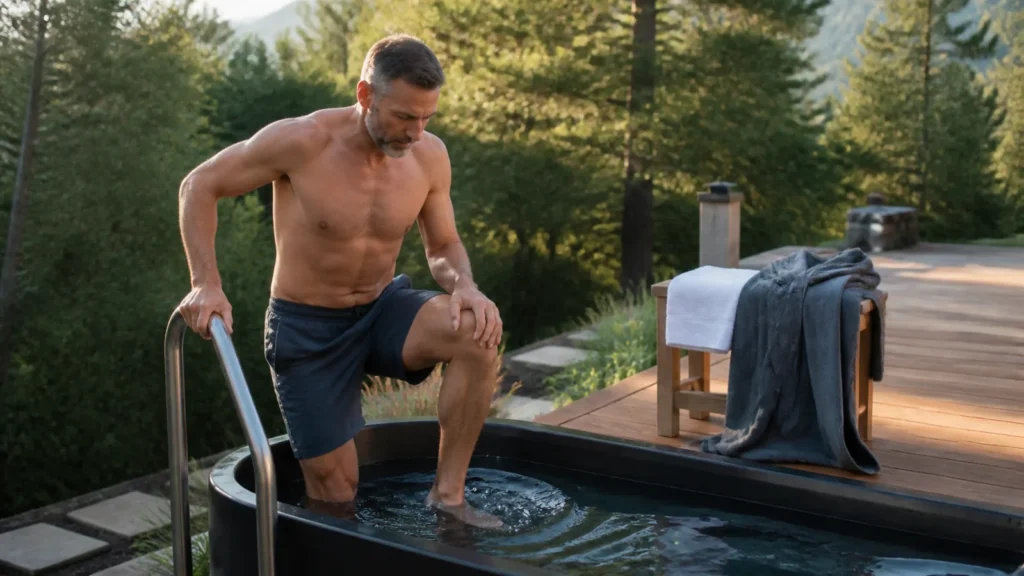
Cold showers and cold plunges create an unmistakable physiological response. That does not mean five minutes reverses aging. Cold water rapidly changes breathing, circulation, blood pressure, and the stress response; the same intensity that feels invigorating can be risky in the wrong setting.
What to keep in mind
A cool shower, a home bath, and an outdoor plunge have different risks. Short-term alertness or reduced soreness does not establish an anti-aging benefit. Decide whether the practice fits your actual goal, keep an exit plan, and avoid breath-holding challenges. Cold exposure is optional; appropriate sleep, food, training, and medical care remain more dependable foundations for recovery.
What the evidence suggests
A 2025 systematic review of randomized studies found time-dependent effects on stress, inflammation, sleep, and quality of life, but the evidence base was limited by few trials and variable protocols. Cold-water immersion can also reduce post-exercise muscle soreness. Claims about immunity, fat loss, mitochondrial rejuvenation, or longer life remain much stronger than the clinical evidence.
The cold-shock response
Sudden immersion can trigger gasping, rapid breathing, increased blood pressure, and loss of control. Open water adds drowning, currents, and hypothermia. Cardiac risk may be higher in people with heart disease, rhythm problems, uncontrolled blood pressure, or a history of fainting.
A more cautious approach
- Start with a brief cool finish to an ordinary shower rather than an ice bath.
- Keep breathing controlled; stop if you feel chest pain, severe breathlessness, dizziness, numbness, or confusion.
- Never combine cold immersion with alcohol or breath-holding challenges.
- Do not plunge alone, especially outdoors.
- Warm gradually afterward and avoid driving while shivering or light-headed.
Who should ask first?
Seek medical advice before deliberate cold exposure if you have cardiovascular disease, uncontrolled hypertension, Raynaud’s phenomenon, seizure risk, pregnancy, or significant respiratory illness.
Separate the claims before judging the evidence
A recovery study, a mood questionnaire, and a lifespan experiment answer different questions. Feeling alert after a plunge does not demonstrate improved immunity. Less soreness after exercise does not demonstrate better muscle growth. A change in an inflammatory marker does not establish protection against cardiovascular disease. When you encounter a dramatic claim, identify the actual outcome before deciding whether it matters to your own goal.
Study conditions also matter. Temperature, immersion depth, duration, previous experience, and the activity performed beforehand all affect the response. A supervised research session cannot be treated as an instruction to reproduce an internet challenge at home. Reviews combine studies to look for patterns, but combining small, varied experiments does not remove their limitations. This is why a single optimal temperature or universal exposure time cannot responsibly be prescribed here.
A cold shower and an outdoor plunge are different decisions
A shower usually lets you control the temperature and step away immediately. A bath introduces immersion, slippery surfaces, and the need to get out safely. A lake or sea adds depth, currents, changing weather, difficult exits, and the possibility that another person cannot reach you quickly. Familiarity with a home shower does not prepare someone for open water. Assess the setting before thinking about any potential benefit.
Being a strong swimmer does not make sudden cold exposure harmless. The initial breathing response can occur before swimming skill becomes useful. Do not practice hyperventilation or prolonged breath holding before or during immersion. A friend filming a challenge is not the same as a prepared person who understands the exit plan and can get help. If the environment cannot be made reasonably safe, choose a different recovery activity.
Build a decision around your actual goal
If the goal is feeling more awake, first consider daylight, a short walk, regular sleep, and a manageable morning routine. If it is exercise recovery, consider food, fluids, sleep, and how demanding the training session was. If it is stress relief, ask whether the practice leaves you calmer later or simply creates a brief rush. An optional activity should solve a problem you actually have rather than create a new performance standard.
For example, a person who enjoys a cool shower may decide that a gentle temperature change is enough. Another may find that it causes dread, dizziness, or a pounding heart. There is no healthspan prize for tolerating the second experience. The ability to stop is part of a sensible experiment. A comfortable walk or quiet recovery period can be a better fit even when cold exposure is popular among friends.
Think beyond soreness after strength training
Short-term recovery and long-term adaptation are not identical goals. An athlete facing another event soon may prioritize feeling ready to compete. A recreational lifter building strength over months may prioritize consistent training and adaptation. Research on repeated cold immersion immediately after resistance exercise raises questions about its effects on muscle development. That does not establish that an occasional cool shower erases a workout; it does mean that more aggressive recovery is not automatically better.
Keep the larger training picture visible. Persistent soreness, deteriorating technique, poor sleep, and falling performance may mean that the program needs adjustment. A plunge should not become a tool for hiding those signals. Review the workload and recovery schedule with a qualified professional when needed. The practical foundations in our guide to resting better are useful whether or not you choose cold exposure.
Make the stopping rules clear in advance
Do not decide how long to stay based on a timer someone else posted. Before any deliberate exposure, consider how you will exit, where you can warm up, and whether you feel well that day. Illness, exhaustion, alcohol, and an unfamiliar setting can all change the decision. Avoid competing with another person’s temperature, duration, or reaction. Feeling unable to speak comfortably or move confidently is a reason to get out, not a milestone to celebrate.
Chest pain, collapse, severe breathing difficulty, confusion, or persistent neurological symptoms require urgent medical attention. Do not assume that every symptom is a normal stress response. People with medical risk factors should discuss deliberate cold exposure with their clinician before experimenting. Even without a known diagnosis, previous fainting, unexplained palpitations, or unusual breathlessness deserve evaluation rather than self-testing in cold water.
Questions worth asking before spending money
A home plunge adds cost, cleaning, maintenance, safe access, and sometimes electrical considerations. Ask whether you already enjoy a simpler version of the activity and whether the promised outcome has human evidence. An expensive tub does not make an uncertain benefit more certain. Assess claims about water sanitation and follow the manufacturer’s maintenance instructions rather than assuming that cold water stays clean on its own.
The most useful result may be discovering that you like an ordinary, brief cool shower. It may also be discovering that you do not need this practice. Either outcome can support a sustainable routine. Cold exposure belongs among optional preferences, with appropriate caution, rather than among the nonnegotiable requirements for aging well.
The Healthspan Muse perspective
Cold can be a chosen stressor, not an anti-aging requirement. If you enjoy it and can use it safely, keep the dose modest. A practice that proves toughness but increases risk is not a longevity practice.
Explore more guidance in our Longevity collection.
Sources
- Cold-water immersion, health, and wellbeing: systematic review and meta-analysis
- Cold-water immersion: benefits and hazards review
- Cold-water immersion and muscle soreness: meta-analysis
This article is educational and is not medical advice.