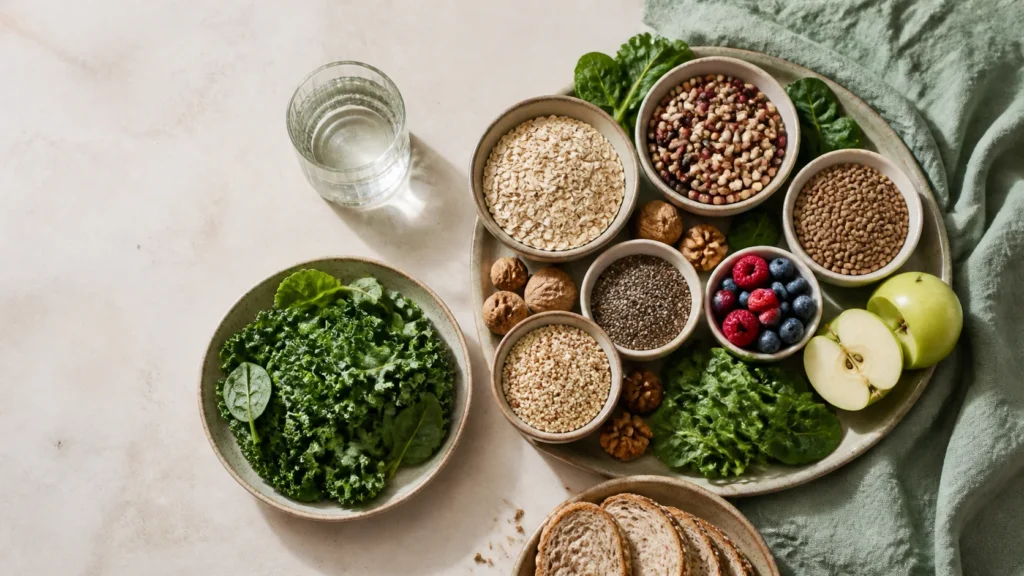
Fibermaxxing is the social-media practice of deliberately packing more fiber into meals—sometimes by adding beans, berries, seeds, vegetables, whole grains, and fiber supplements to nearly everything.
What to keep in mind
Increasing fiber gradually is more useful than meeting a dramatic social-media target overnight. Keep protein, energy, fluids, and medical restrictions in the picture. Gas is not proof of a detox, and significant pain is not evidence that the plan is working. Adjust the portion or pace when needed and seek advice for persistent or alarming symptoms instead of adding ever more fiber.
The trend has a sensible foundation. Many Americans eat less fiber than recommended, and fiber-rich dietary patterns are associated with better digestive and cardiometabolic health. The trouble begins when “eat more plants” turns into “double your intake by tomorrow.” Your gut may file a formal complaint.
What Fiber Does
Dietary fiber is the carbohydrate in plant foods that is not fully digested in the small intestine. Different fibers behave differently. Some dissolve or form gels; some add bulk; some are fermented by gut microbes; many do more than one thing.
Fiber can help:
- support regular bowel movements;
- increase fullness;
- slow the absorption of carbohydrate in mixed meals;
- lower LDL cholesterol when certain soluble fibers are eaten regularly;
- feed gut microbes that produce compounds such as short-chain fatty acids;
- increase the nutrient density and variety of an overall diet.
These benefits come from sustained eating patterns, not a single heroic bowl of bran.
How Much Fiber Do You Need?
U.S. guidance generally frames fiber needs relative to calorie intake—about 14 grams per 1,000 calories. Common adult targets are roughly 25 grams daily for many women and 38 grams for many men before age 50, with somewhat lower targets later in life as calorie needs decline.
These are useful reference points, not a competition. Individual tolerance, energy intake, medical conditions, and current eating patterns matter.
What Counts as a High-Fiber Food?
Useful sources include:
- beans, lentils, chickpeas, and split peas;
- raspberries, blackberries, pears, apples, and avocado;
- oats, barley, quinoa, and other intact whole grains;
- broccoli, Brussels sprouts, artichokes, carrots, and leafy vegetables;
- chia, flax, pumpkin seeds, nuts, and nut butters;
- high-fiber breads and cereals with sensible ingredient lists.
Variety matters because different plants provide different fibers and nutrients. A diet built around one powder may reach a gram target without delivering the same food diversity.
Can You Eat Too Much Fiber?
Yes—particularly if intake rises suddenly. Gas, bloating, cramping, constipation, or diarrhea can occur. Large amounts of fiber without adequate fluid may make constipation worse. An extremely bulky diet can also reduce appetite and crowd out protein, healthy fats, or total energy in older adults and people who already struggle to eat enough.
Fiber supplements can affect the absorption or timing of some medications. Separate them when instructed by a pharmacist or product label.
Who Should Be More Cautious?
Do not treat fibermaxxing as a universal prescription if you have:
- irritable bowel syndrome with significant food triggers;
- inflammatory bowel disease during a flare;
- gastroparesis or delayed stomach emptying;
- a bowel narrowing, obstruction history, or recent gastrointestinal surgery;
- unexplained abdominal pain, vomiting, bleeding, or major bowel changes;
- a medically prescribed low-fiber diet.
These situations require individualized guidance. “Natural” does not mean appropriate for every digestive tract at every moment.
How to Keep Fibermaxxing From Backfiring
1. Add one change at a time
Add berries to breakfast, beans to lunch, or an extra vegetable at dinner. Hold that change for several days before adding another. This makes symptoms easier to interpret.
2. Increase fluids appropriately
Fiber works best with adequate fluid. Needs vary, and people with heart or kidney conditions may have fluid restrictions, so follow individualized advice.
3. Cook plants when needed
Cooked vegetables, soups, oats, and well-rinsed canned beans may feel gentler than a mountain of raw cruciferous vegetables.
4. Spread fiber across the day
Your digestive system may tolerate three moderate servings better than one enormous fibermaxxed meal.
5. Keep protein and energy in the picture
A beautiful high-fiber bowl should still support the rest of your needs. Add yogurt, eggs, tofu, fish, poultry, or another suitable protein rather than allowing volume alone to define “healthy.”
A Gentle Seven-Day Fiber Upgrade
- Day 1: Add one serving of berries or a pear.
- Day 2: Choose oats or a higher-fiber cereal.
- Day 3: Add one-half cup of beans or lentils if tolerated.
- Day 4: Include a cooked vegetable at lunch and dinner.
- Day 5: Add a tablespoon of ground flax or chia with fluid.
- Day 6: Replace one refined grain with a whole grain.
- Day 7: Pause and assess digestion before adding more.
This is an example, not a requirement to make seven changes in seven days. If your baseline intake is very low or your gut is sensitive, take several weeks.
Food or Fiber Supplements?
Food-first is a useful default because whole foods provide vitamins, minerals, protein, and plant compounds alongside fiber. Supplements such as psyllium can be helpful for specific goals and have evidence for constipation and cholesterol reduction.
Start with a small dose, follow the label, take it with adequate liquid, and check medication timing. Avoid swallowing dry fiber powder.
Frequently Asked Questions
Does fibermaxxing help with weight loss?
Higher-fiber foods can increase fullness and support a nutritious eating pattern. They do not override total intake, sleep, medications, or the many biological influences on weight.
Will more fiber “detox” the body?
Fiber supports bowel function and helps the body eliminate certain compounds through stool. It does not perform a mysterious cleanse or replace the liver and kidneys.
Is bloating proof that fiber is working?
No. Mild temporary gas can occur, but significant pain or persistent symptoms are not a badge of nutritional commitment.
Make the next change smaller than the trend suggests
Choose the meal where adding a plant food is easiest, then repeat that change before adding several more. For example, add berries to a breakfast you already eat or use a small serving of beans beside dinner. This is easier to evaluate than changing every meal and starting a fiber powder on the same day. If symptoms appear, you will have a clearer idea of what changed.
Review the quality of the whole meal, including protein, energy, flavor, and convenience. A bowl can be very high in fiber and still fail to meet your needs if it displaces too much food or leaves you unable to eat comfortably. The aim is a sustainable pattern, not winning a daily gram competition. Medical restrictions and persistent digestive symptoms take priority over a social-media target.
The Bottom Line
Fibermaxxing is useful when it reminds people to eat more beans, berries, vegetables, seeds, and whole grains. It becomes less useful when the number matters more than comfort, nutritional balance, or medical context.
Build gradually, drink appropriately, choose varied foods, and let your digestive system participate in the decision. The healthiest fiber goal is one you can sustain without reorganizing your day around abdominal distress.
For a related practical guide, read How to Increase Fiber Without Bloating.
Sources
- FDA: Questions and answers on dietary fiber
- NIDDK: Eating, Diet, and Nutrition for Constipation
- Dietary fiber and health outcomes: umbrella review
- Dietary fibre and whole grains in diabetes management
This article is educational and is not a substitute for individualized medical or nutrition advice.