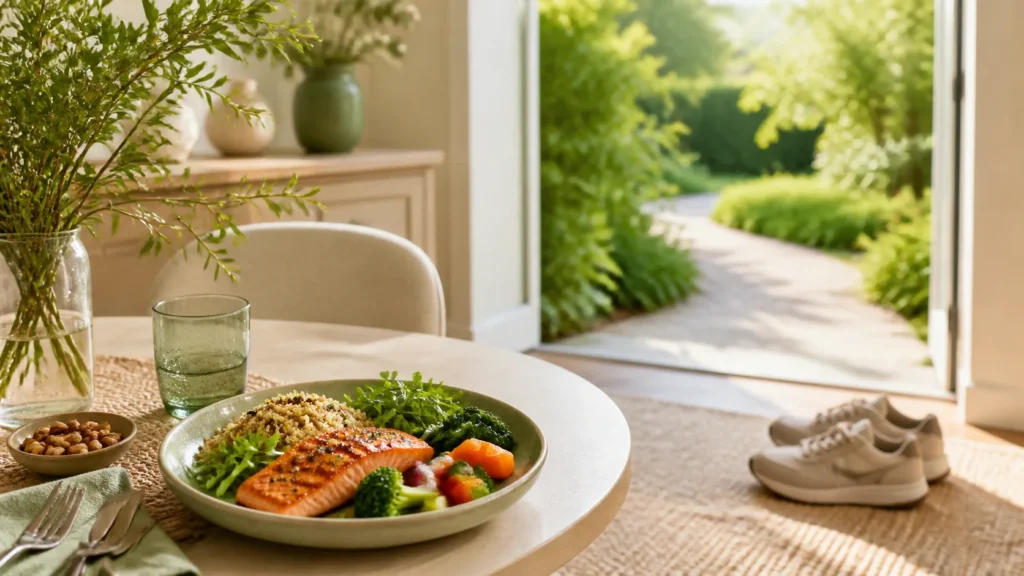
Walking after meals may help lower the rise in blood sugar that follows eating. The idea is refreshingly ordinary: instead of settling immediately into a chair, use your muscles for a few minutes while glucose from the meal is entering the bloodstream.
This is not a cure for diabetes and it does not make food choices or medication irrelevant. It is a small, practical habit that can complement a broader plan.
Why Timing Matters
After a meal containing carbohydrate, digestion releases glucose into the blood. Insulin helps move that glucose into cells. Contracting muscles can also increase glucose uptake, which helps explain why movement soon after eating may reduce the post-meal peak.
A 2023 systematic review and meta-analysis found that exercise performed as soon as practical after eating had a greater acute effect on post-meal glucose than exercise completed before the meal or after a longer delay. Trials are generally small and short, but the direction is consistent.
How Long Do You Need to Walk?
You do not need a dramatic workout. Studies have used different protocols, including brief activity breaks, 10- to 15-minute walks after major meals, and 30-minute brisk walks.
A realistic starting point is 10 minutes of comfortable walking within about 30 minutes after a meal. If that feels easy, gradually increase the pace or duration. Three short walks may fit daily life better than one long session and place movement closer to each glucose rise.
Does It Have to Be Brisk?
A purposeful but conversational pace is reasonable. More intensity is not always better immediately after a large meal, especially if you experience reflux, nausea, joint pain, or dizziness. Consistency matters more than turning dinner into an athletic event.
Who May Benefit?
- people with type 2 diabetes or prediabetes, as part of clinician-guided care;
- adults who sit for long periods;
- people seeking a manageable entry point into activity;
- older adults working to preserve mobility and metabolic health.
People without diabetes can also use post-meal walking as a pleasant way to accumulate movement. You do not need a continuous glucose monitor to justify a walk.
Safety With Diabetes Medication
Insulin and some glucose-lowering medications can cause hypoglycemia. Activity may add to that effect. Ask your care team whether you should check glucose, carry fast-acting carbohydrate, or adjust timing. Do not change medication on your own.
Stop if you develop chest pain, faintness, severe shortness of breath, or symptoms of low blood sugar. People with foot ulcers, major neuropathy, balance problems, or recent heart events may need a different form of post-meal movement.
Alternatives When Walking Is Not Practical
Indoor laps, gentle stair climbing, sit-to-stands, light housework, or brief standing and movement breaks may help interrupt sitting. Evidence is strongest for active muscle use, not one perfect route around the block.
What a Post-Meal Walk Cannot Do
A walk cannot erase a meal, “burn off” dessert, or guarantee a flat glucose curve. Glucose responses vary with sleep, stress, illness, medication, meal composition, and individual physiology. Continuous glucose monitors can also encourage people without diabetes to overinterpret harmless fluctuations.
The habit works best when it is framed as supportive movement, not punishment for eating. A balanced meal followed by a pleasant walk is a sustainable pattern; bargaining with food through exercise is not.
Frequently Asked Questions
Should I walk after every meal?
No. Begin with the meal that is easiest to follow with movement. One repeatable walk is more valuable than an ambitious plan abandoned in three days.
Can I walk before eating instead?
Any regular activity is beneficial. For the immediate post-meal glucose response, research generally favors movement begun soon after eating.
What if I feel reflux or nausea?
Wait until you feel comfortable, reduce the pace, and discuss persistent symptoms with a clinician. The “best” timing is not useful if it makes you feel unwell.
A Seven-Day Starter Plan
- Choose the meal after which you usually sit longest.
- Walk for five to ten minutes at an easy pace.
- Repeat on most days for one week.
- If tolerated, add a second meal or a few minutes.
- Judge success by consistency and how you feel—not a perfect glucose curve.
How to Make the Habit Easier to Keep
Attach the walk to an existing cue: clearing the dinner plates, taking the dog outside, calling a friend, or listening to one short podcast segment. Keep comfortable shoes near the door and decide on an indoor route for bad weather. If ten minutes feels unrealistic, begin with five. The habit can grow after it becomes automatic.
A brief walk should not become a moral payment for eating. The goal is to use movement as ordinary metabolic support and to break up prolonged sitting. On days when pain, illness, weather, or caregiving makes a walk impractical, a few minutes of comfortable indoor movement still counts.
How This Fits With Weekly Exercise
Post-meal walking complements rather than replaces the broader activity guideline of aerobic movement plus muscle-strengthening work. Short walks can help accumulate weekly minutes, while strength training supports muscle tissue that plays an important role in glucose disposal. Build the combination gradually instead of trying to transform every meal and workout at once.
Make room for the walk in an ordinary lunch break
Work backward from the time you need to be back. If a meeting starts soon after lunch, choose a short route with a clear turnaround point. This saves you from spending half the break deciding where to go. If you eat with someone else, invite them along and let the slower walker set the pace. At home, an indoor route can be easier to repeat when daylight or weather changes. For a week, simply mark which lunches left room for a walk. That record can help you choose a realistic routine without turning every meal into a performance test.
The Bottom Line
A short walk soon after eating can modestly improve the immediate glucose response to a meal. It is inexpensive, adaptable, and useful—but it belongs beside adequate sleep, nutritious food, strength and aerobic activity, and appropriate medical care.
Ten minutes is not magic. It is simply small enough to become real.
To build a wider movement routine, see our simple strength-training plan for women over 40.
Sources
- Timing of exercise and postprandial glucose: systematic review and meta-analysis
- Walking after meals in people with type 2 diabetes
- Postprandial walking and glucose response
- American Diabetes Association: Fitness
This article is educational and is not a substitute for individualized medical or exercise advice.