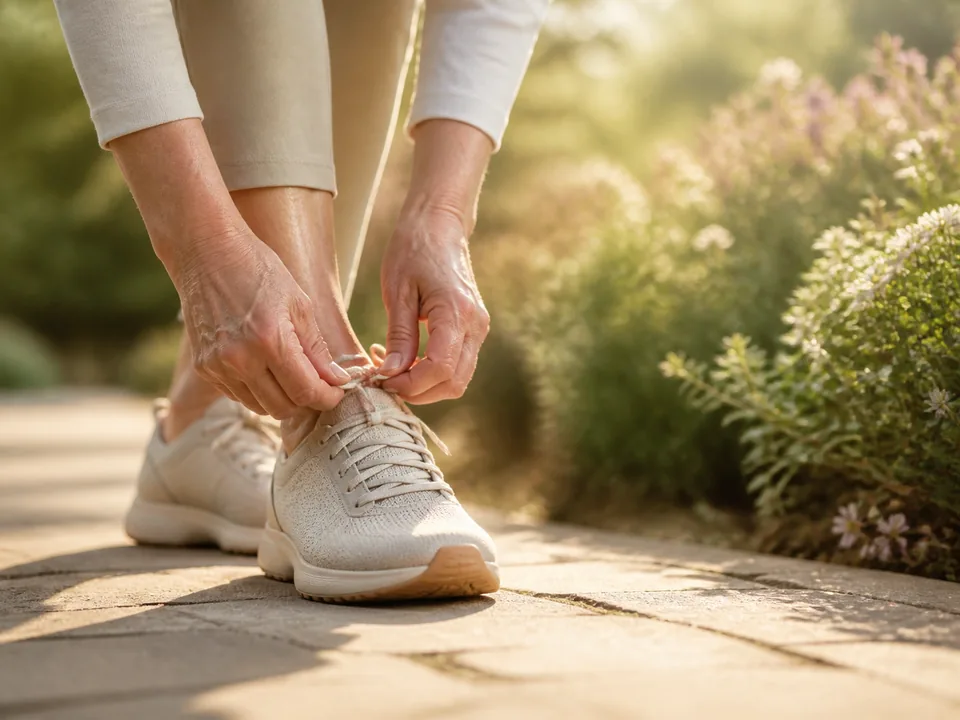
There is a particular relief in choosing a form of movement that does not ask us to become a different person first. No special identity, no complicated routine, no perfect outfit. Walking can begin at the front door, between meetings, after dinner, or in the small window before the day belongs to everyone else.
What to keep in mind
Use this guide to build the habit itself rather than chase a particular step count. Choose a safe route and a repeatable cue, then adjust duration and pace to your starting point. Walking contributes to aerobic activity, while strength and balance work serve additional purposes. Review persistent pain, unusual breathlessness, or a major change in walking ability instead of trying to solve every problem by adding more steps.
For women thinking about healthspan—the ability to stay capable, connected, and well as we age—that accessibility matters. Walking is not a cure-all, and it does not “reverse aging.” It is something more useful: a repeatable way to spend less time sitting, support aerobic fitness, and practice caring for a body that has carried us through changing seasons of life.
Why a regular walk can matter
Physical activity has both immediate and longer-term benefits. The CDC notes that activity can support sleep and mental health, including lower short-term feelings of anxiety, while regular activity may help with depression and anxiety risk.[1] A walk will not solve grief, burnout, hormonal shifts, or a difficult week. Still, the experience of moving outside, changing the view, and letting the nervous system downshift can be a meaningful part of a wider care plan.
The cardiovascular case is equally grounded. Regular physical activity is associated with lower risk of heart disease and stroke, and can help lower blood pressure and improve cholesterol levels.[1] Walking can be a practical way to accumulate that activity because it is adaptable: a gentle neighborhood loop, a purposeful errand on foot, or a brisk stretch with a friend can all count.
“Brisk” is relative. For many people, moderate intensity means breathing faster while still being able to speak in sentences, though not sing comfortably. Your pace may look different after pregnancy, during perimenopause, with joint pain, after an illness, or simply on a hot day. The point is not to match someone else’s speed. It is to choose an effort you can return to.
Walking also supports the everyday capacities that make independence feel spacious: getting up hills, carrying groceries, keeping up with a child or grandchild, traveling without fear that a long day on your feet will undo you. For middle-aged and older adults, physical activity is linked with a lower risk of functional limitations; varied activity can also improve physical function and reduce fall risk.[1] Walking is one useful piece of that picture, not the whole picture.
A helpful target, held lightly
U.S. guidance recommends at least 150 minutes of moderate-intensity aerobic activity weekly, plus muscle-strengthening activity on two or more days each week.[2] That can sound like another standard to fail. It does not need to be.
The same guidance makes room for smaller pieces of movement spread across the week.[2] Ten minutes after lunch, another ten while listening to a favorite podcast, and a slightly longer weekend walk can become a real rhythm. The first goal is not 150 minutes; the first goal is making walking feel ordinary enough that you do it again.
A simple starting point might be:
- Week one: Walk for 10 minutes on three days, at an easy, conversational pace.
- Week two: Add five minutes to one or two walks, or add a fourth day if that feels kinder than extending time.
- Weeks three and four: Build toward 20 to 30 minutes on most days, using one shorter walk when life is full.
If you already walk regularly, change only one variable at a time: a few more minutes, a modest hill, a slightly quicker middle section, or a route with stairs. Recovery is information, not a test of character. A pace that leaves you unusually sore, exhausted, dizzy, or unable to enjoy the rest of your day is feedback to ease back.
Build a practice that fits real life
Consistency rarely comes from willpower alone. It comes from reducing friction. Put shoes by the door. Keep a light layer and water bottle ready. Attach a walk to something that already happens: the school drop-off, the end of the workday, the first call with a faraway friend.
For some women, walking is also a quiet place to reclaim time without turning it into another project. You may enjoy silence. You may prefer music, an audiobook, prayer, or a walking partner. None of these choices changes the physiology very much; they may change whether the habit survives a busy month.
Try to notice function before numbers. Are stairs a little less daunting? Is your afternoon energy steadier? Do you sleep more soundly after an outdoor walk? A step count can be interesting, but there is no universal magic number. The CDC emphasizes that adults who sit less and do any amount of moderate-to-vigorous activity gain some benefit.[1] A lower-step day is not a failed day.
Walking deserves company from other forms of movement, too. The adult recommendations include strengthening all major muscle groups on at least two days weekly.[2] Gentle resistance training, body-weight work, Pilates, gardening that truly challenges the muscles, or a well-designed class can help fill that role. Balance work becomes especially valuable with age. Together, aerobic activity, strength, and balance offer a more resilient foundation than steps alone.
Safety is part of self-respect
Most people can begin with easy walking, but starting gradually is wise. Choose supportive shoes, a route with predictable footing, and daylight or well-lit paths when possible. Bring water in heat, use sun protection, and let weather change the plan rather than forcing an uncomfortable outing. If you use a cane, walker, or other mobility aid, ask a clinician or physical therapist about a safe, confidence-building plan.
Medical caveat: This article is general education, not personal medical advice. Speak with a clinician before beginning or substantially increasing activity if you have known heart or lung disease, uncontrolled blood pressure or diabetes, chest pain, unexplained shortness of breath, fainting or dizziness, a recent surgery or injury, significant balance concerns, or are pregnant/postpartum and unsure what is appropriate for you. Stop exercising and seek urgent care for chest pressure or pain, fainting, severe shortness of breath, or new neurological symptoms.
The American Heart Association describes walking as one of the simplest ways to get and stay active, and notes its connection to heart-health habits.[3] That simplicity is its strength. It asks for attention, not intensity; repetition, not perfection.
A walk will not promise a longer life or a younger body. What it can offer is a small, evidence-informed vote for the life you want to inhabit: one with steadier energy, stronger legs, more room to think, and more confidence in your ability to keep moving through the years.
For a related practical guide, read Maintaining Muscle Strength After 50: What Supports Strength and Function.
Sources
[1] https://www.cdc.gov/physical-activity-basics/benefits — CDC: Benefits of Physical Activity
[2] https://cdc.gov/physical-activity-basics/guidelines/adults.html — CDC: Adult Activity: An Overview
[3] https://www.heart.org/en/healthy-living/exercise-and-physical-activity/walking — American Heart Association: Walking