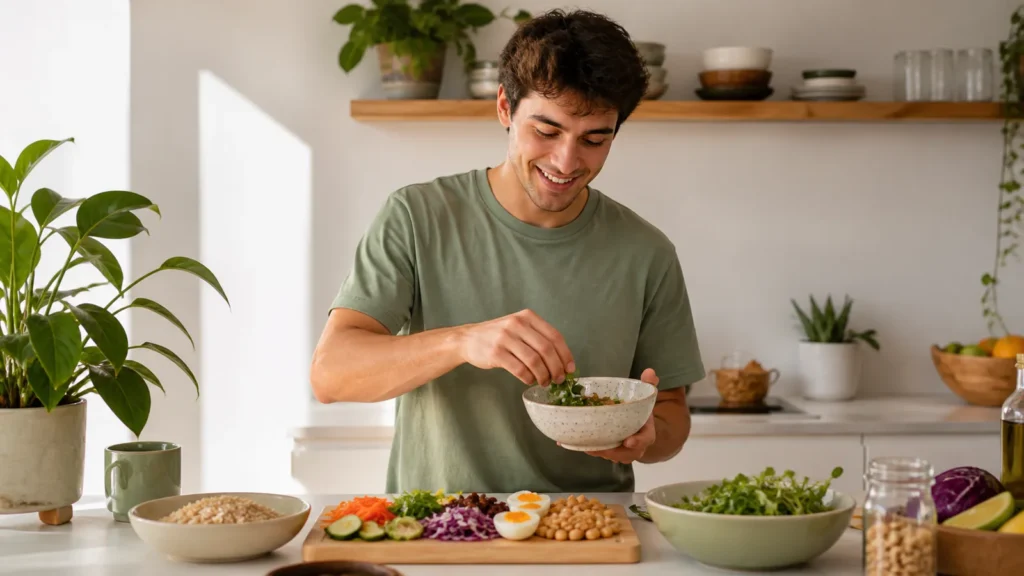
Healthy eating in your 20s does not require expensive superfoods, a flawless refrigerator, or Sunday meal prep performed with military precision. It means learning a few adaptable meals, eating enough to support energy and concentration, and creating habits that can move with you through changing jobs, homes, relationships, and budgets.
What to keep in mind
Build capability before complexity. A handful of affordable meals, an adequate grocery supply, and useful convenience foods can support a changing schedule better than a strict weekly menu. Review specific nutrient needs when pregnancy planning, a vegan diet, heavy bleeding, or a medical condition is relevant. A sustainable food pattern leaves room for culture, pleasure, and social life rather than making every meal a test.
Your 20s can be nutritionally chaotic. College schedules become work schedules; rent competes with groceries; social meals, travel, and late nights disrupt routines. The goal is not to eat like someone whose life looks nothing like yours. It is to build capability and a calmer relationship with food.
Start With Adequacy, Not Restriction
Wellness culture often begins by telling young adults what to remove. A better first question is whether you are eating enough and eating regularly enough to feel steady. Long gaps followed by grazing or a very large late meal may leave some people tired, distracted, or uncomfortably hungry.
A balanced meal can include protein, a carbohydrate, produce, and fat. Try eggs with whole-grain toast and fruit; rice with beans, salsa, and avocado; pasta with vegetables and tuna or chickpeas; or yogurt with oats, berries, and nuts. Appetite and schedules differ, so use the idea flexibly.
Learn Five Meals Before Chasing Fifty Recipes
Cooking confidence grows through repetition. Choose five meals you like, can afford, and can prepare without a complicated shopping list:
- an egg, tofu, or bean-based breakfast;
- a grain bowl with frozen vegetables and protein;
- pasta with vegetables and a simple sauce;
- soup, bread, and a salad or fruit;
- a flexible stir-fry, taco, or sheet-pan dinner.
Once those are easy, add variations. Skills are more durable than motivation.
Build a Budget-Friendly Grocery List
Nutritious food does not have to be fresh, organic, or photogenic. Frozen produce is useful and reduces waste. Canned beans and fish are convenient. Oats, rice, pasta, potatoes, and whole-grain bread provide affordable carbohydrate. Eggs, lentils, tofu, peanut butter, yogurt, and canned fish can stretch the protein budget.
Compare unit prices where helpful, plan around foods you will actually eat, and freeze leftovers before they become guilt at the back of the refrigerator. A shorter, realistic list often saves more than an ambitious plan.
Fiber and Plant Variety Matter
Vegetables and fruit contribute vitamins, minerals, fiber, and diverse plant compounds. Whole grains, beans, nuts, and seeds expand that variety. You do not need a daily rainbow chart, but rotating choices over the week is a useful target.
If produce tends to spoil, buy a mix of fresh and frozen. Add spinach to eggs, frozen berries to oats, beans to pasta sauce, or vegetables to a familiar sandwich. Small additions count.
Protein Without the Hype
Protein supports muscle, recovery, enzymes, and immune function. Many young adults can meet their needs with food, including vegetarian patterns. More protein is not automatically more health, and powders are optional convenience products rather than a requirement.
Athletes and people with specific health goals may benefit from individualized advice. A protein supplement should not crowd out meals or become a substitute for adequate overall energy.
Iron, Calcium, Vitamin D, and B12
Iron deserves attention for people who menstruate, especially with heavy periods. Food sources include meat, shellfish, beans, lentils, tofu, and fortified cereals. Fatigue, dizziness, or shortness of breath should be evaluated rather than self-treated with high-dose iron.
Calcium and vitamin D support bone health during a period when protecting peak bone mass still matters. Dairy, fortified plant beverages, calcium-set tofu, and canned fish with soft bones are options. Check plant beverage labels because their protein and fortification vary.
Vitamin B12 needs intentional planning in vegan diets. Reliable fortified foods or a supplement may be necessary. A registered dietitian can help make a plant-based pattern nutritionally complete without turning it into a full-time job.
Pregnancy Planning Changes Some Priorities
Anyone who could become pregnant should discuss folic acid and other prenatal considerations with a qualified clinician. The timing matters because early fetal development begins before many people know they are pregnant. Medication, supplement, alcohol, and food-safety questions also deserve individualized guidance.
Caffeine, Energy Drinks, and Sleep
Coffee can fit into adult life, but caffeine is not a replacement for sleep or food. Energy drinks may combine high caffeine with other stimulants and sugar. Notice dose, timing, anxiety, heart palpitations, and sleep effects.
If you need caffeine simply to feel functional every day, look at sleep opportunity, workload, meal regularity, and possible health issues rather than continually increasing the dose.
Alcohol Is Not a Wellness Tool
Social life in the 20s can make alcohol feel nutritionally invisible. It is not. Alcohol can affect sleep, judgment, recovery, mental health, and long-term disease risk. Drinking less, drinking more slowly, alternating with nonalcoholic beverages, and planning transportation are practical harm-reduction steps. People who do not drink do not need to start for health.
Protect Your Relationship With Food
Rigid tracking, fear of entire food groups, compensatory exercise, bingeing, purging, or avoiding social life because of food deserves compassionate attention. Eating disorders affect people of every gender, size, race, and background. You do not have to “look sick” to need help.
Social media can turn normal eating into a performance. Unfollow accounts that intensify guilt, comparison, or supplement anxiety. Look for professionals who discuss evidence, access, culture, and mental well-being—not only appearance.
Convenience Can Be Intelligent
A supermarket rotisserie chicken, bagged salad, frozen meal with added vegetables, canned soup with whole-grain bread, or prepared hummus plate can be a legitimate dinner. Use convenience strategically rather than treating it as failure.
Our green smoothie guide offers one quick framework, but a smoothie is only one option. Breakfast can also be leftovers, a sandwich, or anything else that works.
Create a backup meal before a perfect meal plan
Choose one meal that uses ingredients you can keep available and prepare when time or money is tight. It might be beans with microwave rice and frozen vegetables, eggs on toast, or a sandwich with fruit. A backup reduces the chance that a disrupted schedule becomes an entire day without enough food. Adapt the ingredients to allergies, culture, cooking access, and budget rather than copying someone else’s ideal kitchen.
The Bottom Line
Healthy eating in your 20s is an investment in capability: shopping, cooking, feeding yourself regularly, and adapting without panic. Aim for enough food, adequate protein, fiber-rich plants, useful carbohydrates, and fats that make meals satisfying.
The best habit is not the most impressive one. It is the one you can afford, enjoy, and repeat when life changes again.
For a related practical guide, read Healthy Eating in Your 30s and 40s: A Practical Foundation.
Sources
- Dietary Guidelines for Americans, current edition
- NIH Office of Dietary Supplements: Iron
- NIH Office of Dietary Supplements: Calcium
- NIH Office of Dietary Supplements: Vitamin B12
- NIH Office of Dietary Supplements: Folate
This article is for educational purposes and is not a substitute for personalized medical advice.