Arterial stiffness is a real feature of vascular aging, but it is not a hidden diagnosis that proves a “healthy heart could still kill you.” It describes reduced elasticity in the large arteries. Stiffer arteries transmit pressure waves differently and often travel alongside familiar risks such as aging, high blood pressure, diabetes, smoking, kidney disease, and inactivity.
What to keep in mind
A stiffness result is one part of a cardiovascular assessment. Ask which method was used, how the result was interpreted, and whether it would change care. A commercial vascular-age label is not a prediction of your future. Keep attention on established risks, symptoms, treatment, and follow-up, and do not use a reassuring screening number to dismiss a new medical concern.
How arterial stiffness is measured
Carotid–femoral pulse wave velocity (PWV) is the most established noninvasive measure. It estimates how quickly a pressure wave travels between major arteries; faster travel generally indicates greater stiffness. Other devices estimate PWV or use measures such as the cardio-ankle vascular index, but methods and reference ranges are not interchangeable.
What the research shows
Longitudinal studies consistently associate higher aortic PWV with greater risk of cardiovascular events and mortality. That makes arterial stiffness a useful risk marker in selected clinical settings. It does not mean a single commercial reading can predict an individual future, and it does not replace blood pressure, cholesterol, diabetes, smoking, family history, symptoms, or a clinician’s overall assessment.
Do you need a special test?
Routine PWV screening is not universally recommended for every symptom-free adult. A home blood-pressure monitor cannot directly diagnose arterial stiffness, and online calculators may largely reflect age and blood pressure. If a clinic offers testing, ask what method is used, whether the device is validated, and—most importantly—whether the result would change care.
What supports vascular health?
- Know and manage your blood pressure.
- Move regularly and include aerobic and strength activity.
- Avoid smoking and address diabetes and cholesterol when present.
- Build meals around vegetables, fruit, legumes, whole grains, nuts, and other minimally processed foods.
- Use prescribed treatment consistently rather than replacing it with “artery cleansing” supplements.
A risk marker is not a complete diagnosis
Risk markers help clinicians estimate patterns in groups and refine an individual assessment. They do not remove uncertainty. Two people with similar arterial stiffness measurements may have different symptoms, medical histories, cholesterol levels, smoking exposure, or treatment needs. A result becomes useful when it changes a well-considered clinical decision, not merely because it produces a number that looks precise.
This distinction is particularly important when a commercial service converts a measurement into a vascular age. That phrase can make a complex estimate feel like a diagnosis or a prediction of remaining life. Ask how the estimate was calculated, which reference population was used, and whether the method is validated for someone with your characteristics. A dramatic age label should not replace the actual report.
Ask what was measured and under what conditions
Different devices may directly measure transit between sites or estimate stiffness using other information. Their results are not necessarily interchangeable. Blood pressure at the time of testing, heart rate, recent activity, and the measurement protocol can affect interpretation. If repeat testing is proposed, ask whether the same method and comparable conditions will be used.
For example, a higher result taken after rushing to an appointment should not automatically be interpreted as sudden structural deterioration. A clinician can decide whether the result is plausible, whether a repeat is needed, and whether another condition changes its meaning. Do not use a consumer device or a single commercial assessment to diagnose yourself with vascular disease.
Prepare for a blood-pressure conversation
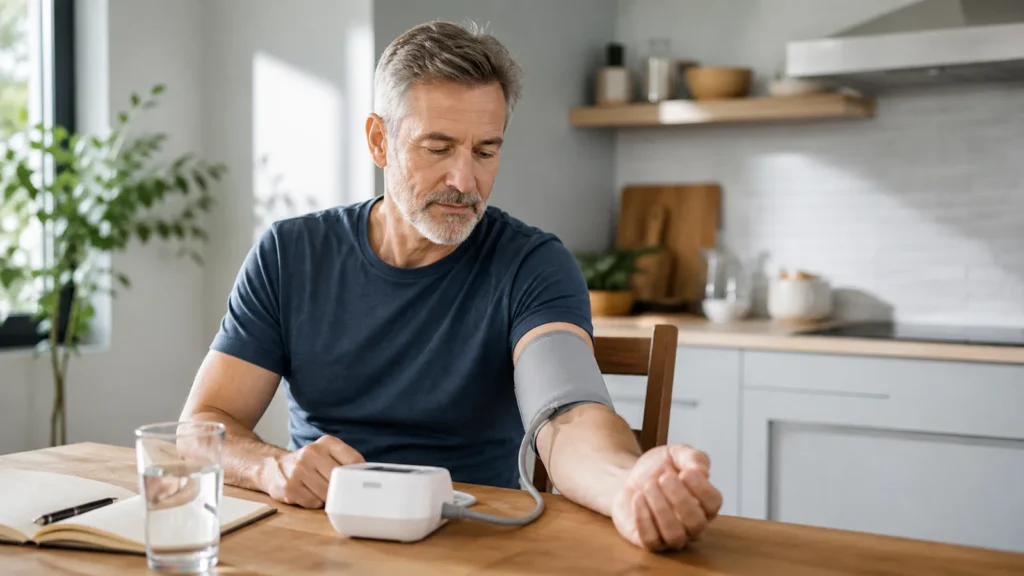
Knowing your usual blood pressure is often more actionable than buying an additional test. If home monitoring has been recommended, ask about a validated device, an appropriate cuff size, correct positioning, and the schedule for readings. Record the results as instructed and bring the device or log to an appointment. Technique and a consistent record help the clinician interpret the pattern.
A single high or low reading is not the entire picture. Follow the instructions your care team has provided about repeat measurements and when to contact them. Do not independently change a prescribed medicine because a stiffness result improved or because one reading looked reassuring. Symptoms and the broader medical context remain important even when a consumer report says your vascular age is young.
Choose changes that address established risks
Rather than looking for a product that promises to soften arteries, review the factors already known to influence cardiovascular health. These include smoking, blood pressure, cholesterol, diabetes, activity, sleep, and dietary pattern. The right priority differs by person. Someone with untreated high blood pressure may benefit more from appropriate assessment and treatment than from adding another wellness measurement.
Start with one change that is specific enough to repeat. Examples include taking prescribed treatment consistently, arranging a recommended follow-up, replacing a highly salty convenience meal more often, or adding a comfortable walk. These actions should fit your medical plan. An exercise program may need individual adaptation if there are symptoms, known cardiovascular disease, or significant mobility limitations.
Food choices without an artery-cleansing story
Vegetables, fruit, whole grains, legumes, nuts, and other nutrient-rich foods can support a cardiovascular eating pattern. They do not mechanically scrub arteries. Be wary of claims that one spice, juice, vitamin, or oil dissolves vascular aging. An interesting laboratory pathway is not evidence that a supplement prevents heart attacks or reverses established disease.
For a practical framework, the DASH eating guide explains how meals can support blood-pressure care. People with kidney disease, medication-related restrictions, or other medical dietary needs should personalize the pattern with their care team. A generally healthy ingredient is not automatically suitable in unlimited amounts for every condition.
A checklist before paying for an additional test
Ask who will interpret the result and whether that professional has access to your medical history. Ask what a normal or abnormal finding would change, what the test cannot detect, and whether a repeat is likely to be suggested. Clarify the cost and whether the service is selling a treatment or supplement linked to the result. A test should answer a clinical question rather than generate anxiety that only another purchase can relieve.
It is reasonable to decline a test that will not change care. It is also reasonable for a clinician to use arterial stiffness information in a selected situation. The purpose is better decision-making, not collecting every available metric. Keep symptoms, established risk assessment, and follow-up at the center of the process. A reassuring screening result should never delay urgent evaluation of new cardiovascular or neurological symptoms.
The Healthspan Muse perspective
Arterial stiffness adds useful detail to the cardiovascular picture, but it is not a secret test everyone has been denied. The most durable strategy remains wonderfully unglamorous: measure the risks we can act on, treat them well, and repeat the habits that protect the vascular system over time.
For a related practical guide, read The DASH Eating Pattern for Blood Pressure: A Practical, Flexible Guide.
Sources
- Aortic pulse wave velocity and cardiovascular outcomes: systematic review and meta-analysis
- Carotid-femoral pulse wave velocity: updated systematic review and meta-analysis
- Noninvasive arterial stiffness measurement methods: systematic review
This article is educational and is not medical advice. New chest pain, severe breathlessness, fainting, or stroke symptoms require urgent medical care.